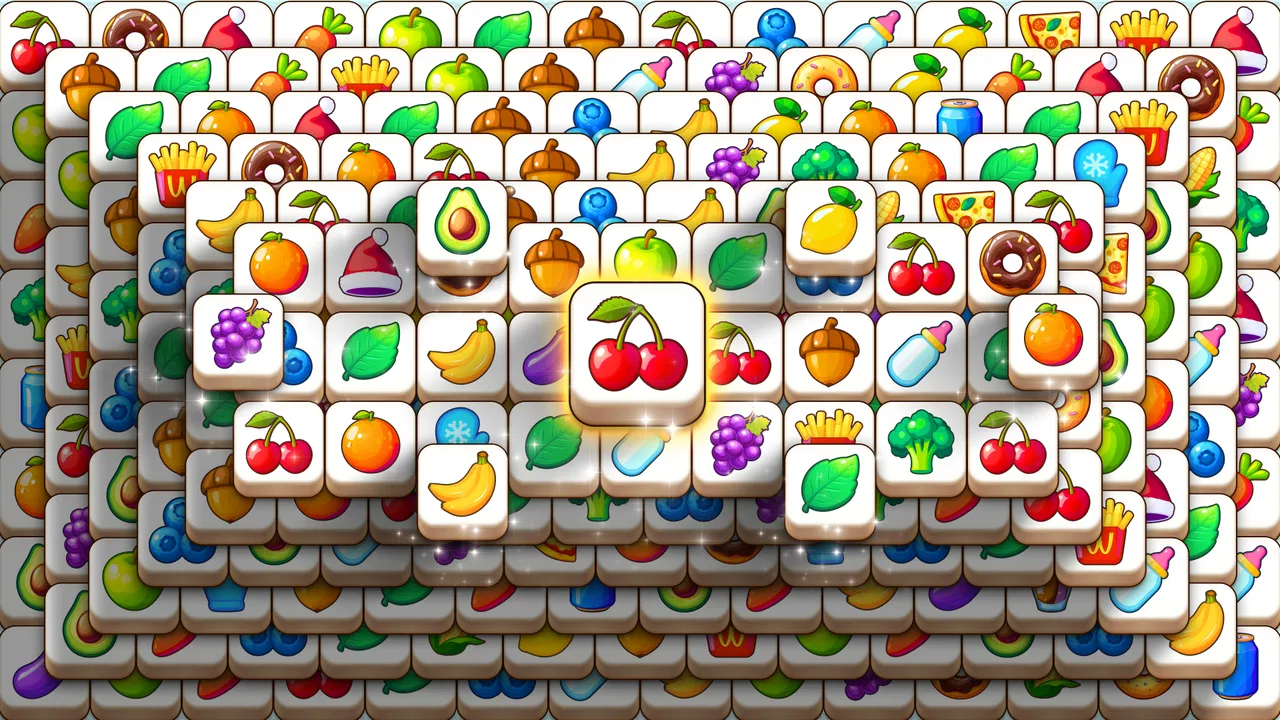
Tile Home-Match Puzzle Games
- 4.9
- Rating
- 10.00M
- Installs
- Free
- Price

 Analysis by App-foxy
Tile Home-Match Puzzle Games is the kind of puzzle I reach for when I want something familiar, colorful, and easy to understand within a few seconds. I spent time with it as a casual tile-matching game from Mindful Daily Puzzles, and its main appeal is straightforward: you match tiles, clear the board, and keep working through compact challenges without needing a long tutorial. That simplicity is also the reason it will not suit everyone, but for short breaks it has a pleasant rhythm.
The game is free to install and is rated for Everyone, which makes it approachable for younger players and families. It has already passed 10 million installs and holds a 4.9 average from roughly 343 thousand ratings, so there is clearly a large audience for this particular style of relaxing puzzle. I would not treat popularity as proof that every player will enjoy it, but it does match my experience: the basic loop is immediately readable, and the visual presentation makes ordinary tile clearing feel more inviting than a plain grid.
Why the tile-matching ability matters
The central capability here is not a complicated rule set; it is the way the game turns tile matching into a small visual sorting exercise. Instead of asking me to learn several systems at once, it puts the focus on recognizing groups, choosing a useful move, and keeping the board manageable. That narrow focus gives the game a calm entry point. I can open it with no preparation, make progress quickly, and stop before a session becomes a major commitment.
You May Also Like

 Blood Strike: 2.5 Anniversary
Blood Strike’s Loadouts Turn Every Drop Into a Tactical Gamble
A close look at Blood Strike’s custom loadouts: how fast access to signature weapons reshapes its battle royale rhythm, rewards preparation, and narrows the gap between fights.

 Pandora - Music & Podcasts
Pandora’s Music Is Easy to Start, but Harder to Recover
Pandora’s strength is its low-effort path from a seed to a station. Its weak spot is how much confidence it asks you to place in connection, setup, and quiet recovery.

 8 Ball Pool
 Is Built on Rivalries, Rematches, and Routine
A close look at the rivalries, rematches, shared routines, and unanswered safety questions that turn a quick pool match into a persistent mobile community.

 Samsung Music
’s Quiet Strength Is Playing What You Already Own
Its reach comes less from spectacle than from dependable access to a personal library. That simplicity is both the app’s strongest retention engine and its ceiling.

 AccuWeather: Weather Radar
AccuWeather Review: A Quick, Clear Forecast for Everyday Decisions
For everyday plans, the best forecast is the one you can understand quickly. AccuWeather makes rain timing, radar, and local conditions easy to act on, with a few trade-offs.

 Hill Climb Racing
Why Hill Climb Racing Still Turns Crashes Into One More Run
A tiny car, a bumpy hill and one more upgrade: Hill Climb Racing keeps resurfacing because its simple chaos makes every near-miss feel personal.
More From Our News Desk



In practical terms, the matching mechanic works best when I stop thinking only about the next available pair or group. The more useful question is what a move will expose or remove afterward. A tile that looks easy to clear may be less valuable than one that opens space for several future matches. This creates a modest layer of planning beneath the bright, accessible surface. It is not the deep strategic challenge of a traditional logic puzzle, but it is enough to make careless moves noticeable.
The real strength is the low mental entry cost. I do not need to memorize a large rulebook or build a complicated strategy before enjoying a round. That makes the game suitable for a short pause, especially when I want something more active than scrolling but less demanding than a competitive game. The same design can also help someone who enjoys visual organization: matching similar tiles offers a satisfying sense of order as the board becomes clearer.
The short description calls it Tile Home, while the full listing presents it as Tile Home-Match Puzzle Games. Either way, the identity is clear enough in use. This is a puzzle experience built around matching tiles and enjoying the process of clearing them, rather than a story-heavy adventure or a reflex-focused arcade title. That distinction matters when choosing it. I would open this game for a gentle concentration exercise, not for dramatic action or a long narrative.
How I approach a board
My most reliable approach is to scan the whole board before making the first move. I look for matches that reduce clutter and for tiles that appear to block useful combinations. When several options seem equally attractive, I choose the one that leaves the board easiest to read. This is a small habit, but it prevents the common mistake of clearing whatever catches my eye first and then discovering that the remaining layout is awkward.
I also avoid treating every available match as equally urgent. A move can be legal and still be strategically weak. If I clear a visible group while leaving more useful tiles buried behind it, I may gain a momentary reward but lose flexibility. The game does not need a complex explanation to create this trade-off; the board itself teaches it. After a few sessions, I found myself planning one move ahead instead of simply reacting to the brightest option.
For a relaxed session, I use a slower rhythm. I let the board settle visually, identify a few possible routes, and then choose the move that keeps several options open. For a more focused session, I challenge myself to make fewer impulsive matches. This gives the same basic mechanic two moods: a soothing pastime when I play casually and a light concentration test when I pay closer attention.
That flexibility is useful in everyday life. If I have only a couple of minutes while waiting for an appointment, I can begin without committing to a lengthy campaign. If I have more time in the evening, I can play more deliberately and treat the board as a small planning problem. I would not describe it as a full mindfulness tool, but its repetitive visual focus can be a welcome change from notifications and fast-moving feeds.
A realistic everyday use case
Imagine finishing lunch with a few minutes before returning to work. A competitive multiplayer game may demand too much attention, while a passive video may leave you feeling as though the break disappeared. This is where the tile-matching format makes sense. I can open the game, settle into the visual pattern, and make a handful of considered moves. The activity occupies my hands and attention without requiring a headset, a team, or a large uninterrupted block of time.
It can also work during a quiet commute, provided the player is not driving and has a stable enough situation to look at the screen safely. The simple visual objective means I can understand what I was doing after a brief interruption more easily than I could in a story game. That makes it forgiving when a message arrives or I need to put the phone down. The trade-off is that a puzzle may lose its flow if I stop at a critical moment, so I prefer it for flexible breaks rather than situations where I expect constant interruptions.
For families, the Everyone rating makes the game easier to consider as a shared casual option. A parent can explain the basic idea quickly, and a child can understand the visual goal without reading a long block of instructions. Still, the rating does not mean every child will find the puzzles equally easy. Younger players may need help recognizing which match is most useful, while older players may want more challenge than the straightforward presentation provides.
Where it differs from familiar alternatives
Compared with a traditional match-three game, this title feels more centered on tile selection and board organization than on rapid chains or elaborate boosters. Players who enjoy planning the order of removals may appreciate that emphasis. On the other hand, someone who expects explosive combinations, constant special effects, or a strong level-based story may find the experience comparatively restrained.
Compared with a daily word puzzle, it asks for visual recognition rather than vocabulary and spelling. That makes it a better choice when I want a language-free activity or when I am too tired for wordplay. A sudoku player may find the matching mechanic less rigorous, because the game does not demand the same kind of deduction. In return, it is quicker to learn and more forgiving as a casual pastime.
It also occupies a different space from competitive puzzle games. There is no need to compare my speed with other players in order to enjoy a session. That reduces pressure, but it also removes the motivation that leaderboards and head-to-head challenges provide. If your main reason for playing puzzles is competition, this may feel too quiet. If you prefer to control the pace and focus on your own board, that quietness becomes an advantage.
Trade-offs that become clear over time
The biggest limitation is the same quality that makes the game accessible: the core loop is narrow. Matching tiles is pleasant, but players who need constant novelty may tire of the pattern. I would be cautious about recommending it as someone’s only puzzle game. It works better alongside a deeper logic title, a word game, or a more energetic match-three alternative, depending on what kind of variety you want.
Another consideration is the free-to-play structure. The game is free, but optional in-app purchases range from $0.99 to $19.99 per item. That does not prevent a player from trying the basic experience, yet it is worth keeping in mind before handing the device to a child or allowing purchases without supervision. For me, the sensible approach is to begin with the free version and decide whether the regular play experience justifies spending anything. I would not buy simply because a difficult board creates impatience.
The presentation is vibrant, which helps tiles remain distinct and gives the board a more cheerful personality. However, bright visuals can also make a busy layout harder to read when I am tired or playing in poor lighting. I find that slowing down helps more than tapping quickly. Players who prefer muted, minimalist puzzle interfaces may not connect with the colorful style, even though it is central to the game’s character.
I also would not choose this game when I want a substantial sense of progression or a story to carry me forward. The appeal is in the individual puzzle decisions and the satisfaction of clearing tiles, not in a rich fictional world. That makes it easy to dip into, but it may feel lightweight after a long session. My own sweet spot is a brief play period followed by a break, rather than treating it as an all-evening game.
The current version is 1.2.2, and the listed minimum operating system is Android 7.0. That gives it a reasonably broad starting point for Android users with older devices, although the actual comfort of play will still depend on the phone’s screen, performance, and battery condition. I especially value a clear display because matching relies on visual separation. On a small or dim screen, the game’s main strength becomes less effective.
Who gets the most from it
I think the best audience is someone who wants an uncomplicated puzzle for short, repeatable sessions. It is a good fit if you like matching games but do not want a timer-driven contest, a large narrative, or a complicated collection of systems. It is also suitable for players who enjoy gradually improving their visual planning: the rules are approachable, while better decisions still come from looking beyond the immediate match.
It can be especially useful for people who move between activities throughout the day. The board-based format is easier to return to after a pause than a fast action game, and the objective is clear enough that I do not need to spend time remembering a plot or a multi-step mission. I would recommend trying it during a quiet break, when you can judge whether the colorful matching loop feels relaxing or repetitive for you.
I would steer other players elsewhere. If you want demanding deduction, choose a dedicated logic puzzle. If you want social competition, look for a multiplayer title. If you want a story, character development, or a broad adventure, this game is unlikely to satisfy that need. And if optional purchases make you uncomfortable, keep the free experience under your own control rather than assuming the game’s accessible opening tells you everything about longer-term use.
Mindful Daily Puzzles has made a focused game rather than an overloaded one. That focus is why it is easy to recommend for casual tile matching, but it is also why I would not oversell it as a universal puzzle solution. The most rewarding way to play is to treat each board as a small visual planning task: scan first, preserve useful options, and avoid clearing tiles just because a match is available.
After trying it, my honest view is that Tile Home-Match Puzzle Games earns its place as a friendly break-time puzzle. The free entry, Everyone rating, accessible rules, and colorful board make it easy to start, while the need to think about move order gives the matching mechanic more substance than a purely automatic tap-and-clear game. Just keep expectations realistic: it is a compact, repeatable tile puzzle, not a deep strategy title. For the right player, that restraint is exactly what makes it enjoyable.
FAQs for Tile Home-Match Puzzle Games
01What is Tile Home-Match Puzzle Games about?
Tile Home-Match Puzzle Games is a mobile puzzle game where players match tiles to clear levels. It combines strategic thinking with visually appealing graphics and soothing music. The game offers various challenges and levels that increase in difficulty, providing a captivating experience for players of all ages.
02Is Tile Home-Match Puzzle Games free to play?
Yes, Tile Home-Match Puzzle Games is free to download and play. However, it does offer in-app purchases for items like extra lives or special tiles. These purchases are optional and designed to enhance the gaming experience, allowing players to progress more quickly or access exclusive features.
03What are the system requirements for Tile Home-Match Puzzle Games?
Tile Home-Match Puzzle Games is compatible with both Android and iOS devices. For Android, it requires version 5.0 and up, while iOS devices need iOS 10.0 or later. Ensuring your device meets these requirements will allow for smooth gameplay and optimal performance.
04Does Tile Home-Match Puzzle Games require an internet connection?
Tile Home-Match Puzzle Games can be played offline, making it a great option for gaming on the go without needing internet access. However, certain features like in-app purchases and leaderboard updates require an internet connection to function properly.
05Are there any advertisements in Tile Home-Match Puzzle Games?
Yes, the game does contain advertisements, which help support the free version. Ads appear between levels and can be removed through in-app purchases. This allows players who prefer an ad-free experience to enjoy uninterrupted gameplay by opting for this paid option.
Pros
- Intuitive interface and easy navigation.
- Variety of levels keeps gameplay fresh.
- Visually appealing graphics and design.
- No intrusive ads disrupting gameplay.
- Smooth performance on older devices.
Cons
- Limited free levels before paywall.
- In-app purchases can be pricey.
- Occasional glitches in level loading.
- Requires constant internet connection.
- No option to customize game themes.

Tile Home-Match Puzzle Games
Gallery